
Guns in Cars in Oregon: How to Legally Transport a Firearm
By Michael G. Romano, Managing Attorney
Can you have a gun in your car in Oregon if you don’t have a Concealed Handgun License (CHL)? Yes, but where you put it matters. Oregon law is strict about handguns in the passenger compartment, cities can add their own rules about loaded firearms, and a separate state law controls what you do with a gun when you walk away from the car.
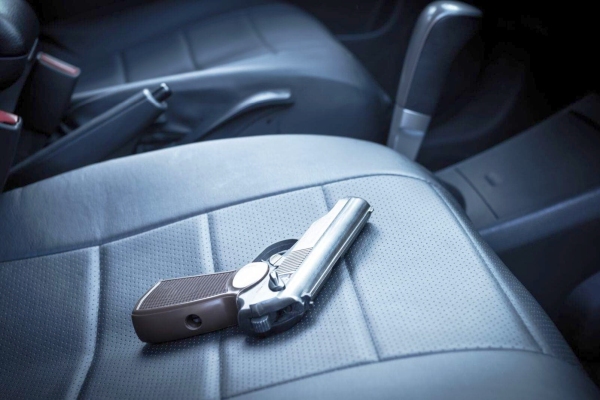
What Oregon Law Says About Guns in Vehicles
The key statute is ORS 166.250, Oregon’s unlawful possession of a firearm law. Among other things, it makes it a crime to knowingly possess a handgun that is concealed and readily accessible to you within any vehicle. It’s a Class A misdemeanor, punishable by up to 364 days in jail and a $6,250 fine.
Two words do all the work: concealed and readily accessible. The statute says a handgun is readily accessible if it’s anywhere in the passenger compartment. That means a pistol under the seat, in the door pocket, or in the glove box is a problem if you don’t have a license. A handgun in plain view isn’t concealed, and the statute says a firearm carried openly in a belt holster isn’t concealed either. But whether a holstered gun stays visible once you’re seated and buckled in is not something you want to argue on the side of the road.
Driving With an Oregon Concealed Handgun License
The simplest way to keep a gun in your car in Oregon is to get an Oregon concealed handgun license. License holders are exempt from ORS 166.250 (ORS 166.260), so you can keep a loaded handgun in the vehicle, concealed and within reach. City and county ordinances that ban loaded firearms in public places don’t apply to license holders either (ORS 166.173).
Oregon doesn’t honor out-of-state permits, and not everyone qualifies for an Oregon license. A felony conviction, a misdemeanor conviction within the past four years, or not living in Oregon can all stand in the way. If that’s you, the rest of this page is how you stay legal.
Transporting a Handgun in a Vehicle Without a CHL
Without a license, the handgun has to be somewhere that isn’t the passenger compartment, or it has to be locked up in a way the statute accepts:
- Cars with a trunk. Put the handgun in the trunk. It isn’t readily accessible there, so the concealment question never comes up.
- Vehicles with no storage outside the passenger compartment. Some SUVs, hatchbacks, and pickups have nowhere else to put it. In those vehicles, a handgun is not readily accessible if it’s in a closed and locked glove compartment, center console, or other container, with the key out of the lock.
- Motorcycles, ATVs, and snowmobiles. The handgun must be in a locked container on the vehicle, or fitted with a trigger lock or similar device that prevents it from firing.
There’s a practical point the statute doesn’t cover. If an officer pulls you over for speeding and you open the glove box to get your registration and proof of insurance, a firearm sitting next to them is going to raise the temperature fast. Keep your vehicle paperwork somewhere else, and keep the gun in its own locked case.
For that, my current recommendation is the awesafe biometric handgun safe, a portable safe that opens with a fingerprint, a PIN, or a key, so you can get into it quickly without ever leaving a key in the lock. A less expensive option is the Amazon Basics portable security case, a compact combination-lock box with a security cable you can loop around a seat bracket. (As an Amazon Associate, Romano Law earns from qualifying purchases.)
Exemptions for Hunters, Anglers, and Target Shooters
ORS 166.260 also exempts licensed hunters and anglers while they’re hunting or fishing or going to and from the trip, and club members using an established target range or going to and from it. The exemption doesn’t help anyone who is otherwise prohibited from possessing firearms, and you should be able to show where you’re headed and why.
Loaded Guns in Cars and Local Ordinances
State law lets cities and counties regulate or ban loaded firearms in public places, and several have. Portland’s ordinance makes it a crime to knowingly possess a firearm in a public place, including while in a vehicle in a public place, while recklessly failing to remove all the ammunition. Hunters, people going to or from a target range, and concealed handgun licensees are exempt.
That means a handgun lying in plain view on the passenger seat can satisfy state law and still violate city code in Portland. If you don’t have a license, unload before you drive into a city with a loaded-firearm ordinance.
Leaving a Gun in a Parked Car
Since 2021, Oregon has required firearm owners to secure any firearm that isn’t being carried by them or under their control (ORS 166.395). A secured firearm has an engaged trigger or cable lock, or is in a locked container. The law’s definition of a locked container includes a locked glove compartment, center console, or enclosed trunk. A handgun left unattended in a vehicle where people outside can see it is never considered secured.
Each unsecured firearm is a separate Class C violation, and it becomes a Class A violation if a minor gets hold of it. The bigger exposure is civil. If an unsecured gun is stolen from your car and used to hurt someone within two years, the violation is negligence per se, and you can’t defend yourself by showing you acted reasonably.
Rifles and Shotguns in Vehicles
The vehicle provision in ORS 166.250 applies to handguns. A rifle or shotgun behind the seat isn’t a concealed handgun, so state law doesn’t require you to lock it up while you’re driving. Two cautions: local loaded-firearm ordinances apply to long guns too, and the storage law applies to every firearm the moment you leave the vehicle.
Driving Through Oregon to Another State
Federal law protects travelers passing through, as long as the gun is legal where the trip starts and where it ends. Under 18 U.S.C. 926A, the firearm must be unloaded, and neither the gun nor the ammunition can be readily accessible from the passenger compartment. In a vehicle without a trunk, both go in a locked container other than the glove compartment or console. Our guide to traveling to Oregon with a firearm covers flying, nonresident permits, and open carry.
Frequently Asked Questions
Can I have a gun in my car in Oregon without a concealed handgun license?
Yes. Without a license, a handgun can’t be both concealed and within reach in the passenger compartment. Put it in the trunk, or, if the vehicle has no storage outside the passenger compartment, in a locked glove compartment, console, or container with the key removed (ORS 166.250). Rifles and shotguns aren’t covered by that rule.
Can I keep a handgun in my glove box in Oregon?
Only if you have an Oregon concealed handgun license, or if your vehicle has no storage outside the passenger compartment and the glove box is closed and locked with the key removed. In a car with a trunk, a handgun in the glove box is readily accessible, and without a license that’s a Class A misdemeanor.
Can I leave a gun in my parked car in Oregon?
Yes, if it’s secured. Oregon’s storage law requires an unattended firearm to have an engaged trigger or cable lock or be kept in a locked container, which includes a locked glove box, console, or trunk. A handgun left where people outside the car can see it is never considered secured (ORS 166.395).
Can I drive through Portland with a loaded gun?
Only with an Oregon concealed handgun license or another exemption. Portland’s city code prohibits possessing a loaded firearm in a public place, including in a vehicle, and other Oregon cities and counties have similar ordinances. Hunters and people going to or from a target range are exempt, but unloading before you drive into the city is the safe practice.
What is the penalty for a concealed handgun in a car in Oregon?
Possessing a concealed, readily accessible handgun in a vehicle without a license is a Class A misdemeanor, punishable by up to 364 days in jail and a $6,250 fine. A misdemeanor conviction also disqualifies you from an Oregon concealed handgun license for four years.
Talk to an Oregon Gun Rights Attorney

If you’ve been charged with unlawful possession of a firearm after a traffic stop, or you want to know whether the way you carry in your vehicle is legal, talk to a lawyer before you talk to the police. Michael Romano has over 25 years of Oregon trial experience, began his career as a prosecutor, and is an avid target shooter and collector. Call 503-208-5529 or schedule a consultation. For more on firearms law, see our Oregon gun rights section.
Last updated: September 27, 2026 | Reviewed by Michael G. Romano, Managing Attorney. This page provides general information about Oregon law, not legal advice for your specific situation.