
How to Restore Firearm Rights After a Conviction in Oregon
By Michael G. Romano, Managing Attorney
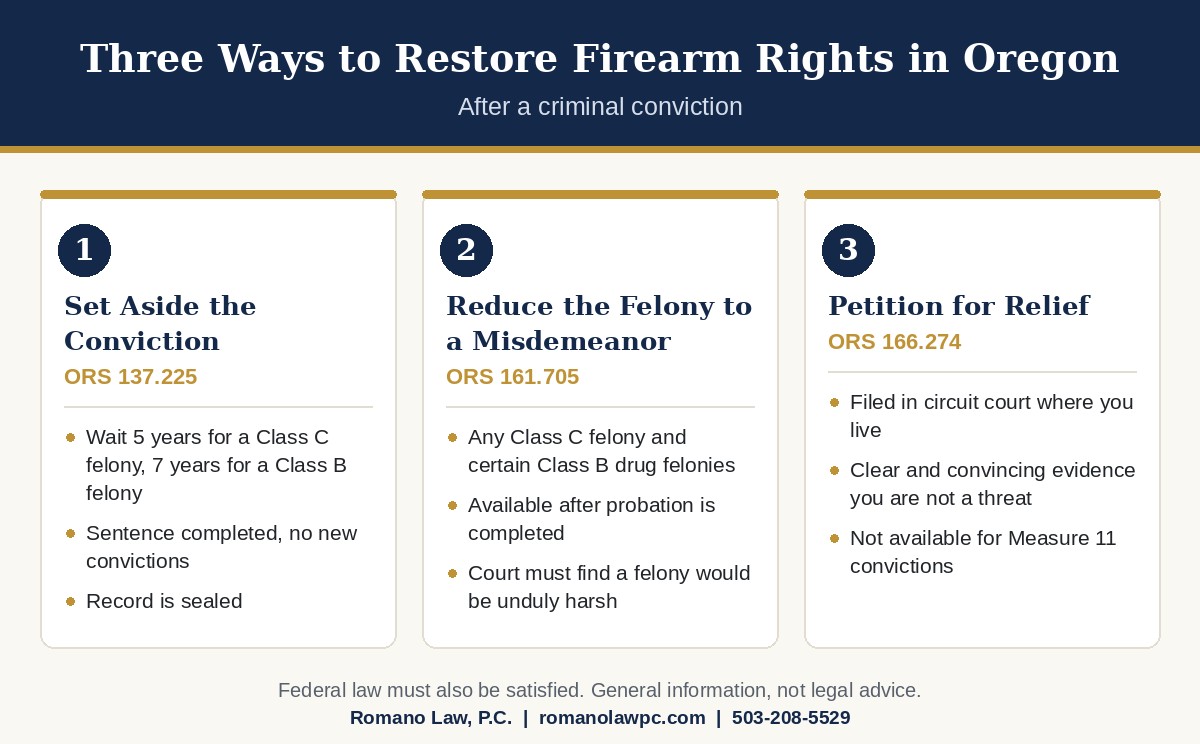
How do you restore your firearm rights after a criminal conviction in Oregon? There are three main ways to go about it: set aside the conviction, reduce a felony to a misdemeanor, or petition a court for relief from the firearms prohibition. Which one fits depends on what you were convicted of, how long ago, and what you’ve done since.
Oregon law prohibits anyone convicted of a felony from possessing a firearm (ORS 166.250), and certain misdemeanors, including domestic violence convictions, carry their own prohibitions under state and federal law. A felony conviction also bars you from an Oregon concealed handgun license for as long as it stands. Getting those rights back takes a court order.
Option 1: Set Aside (Expunge) Your Conviction
You may have heard this called expungement. Legally, the process is a motion to set aside a conviction under ORS 137.225. Once the court grants it, you are treated for most legal purposes as if you were never convicted, and the record is sealed.
You must have completed your sentence, and you have to wait. The waiting period runs from the conviction or your release from prison: five years for a Class C felony, seven years for a Class B felony, three years for a Class A misdemeanor, and one year for lesser offenses. You can’t have another conviction during that period or a pending charge when you file. Some convictions can’t be set aside at all, including most sex offenses and certain crimes against children and elderly victims.
You don’t need a lawyer to file a set-aside motion, but a lawyer makes the process faster and avoids the mistakes that get motions denied. The district attorney’s office receives the motion and can object, and a contested motion goes to a hearing. For more, see our Oregon expungement page.
Option 2: Reduce a Felony to a Misdemeanor
Some felonies can’t be set aside yet, or ever. The next option is asking the court to reduce the felony conviction to a misdemeanor under ORS 161.705. It’s available for any Class C felony, and for certain Class B felonies involving controlled substances or marijuana, once you’ve successfully completed probation.
The court must find that leaving the conviction as a felony would be unduly harsh, considering the nature of the crime and your history and character. The reduction is much easier when it was part of the original plea agreement or the district attorney agrees. If the DA opposes it, expect a hearing with evidence and legal argument.
Option 3: Petition for Relief Under ORS 166.274
If the conviction can’t be set aside or reduced, ORS 166.274 lets you petition the circuit court in the county where you live for relief from the firearms prohibition itself. You must prove by clear and convincing evidence that you don’t pose a threat to the safety of the public or yourself. You can file once per calendar year, and you must serve the petition on your local police chief or sheriff. Law enforcement’s position often shapes the outcome.
Not everyone can petition. Relief isn’t available if you were convicted of a Measure 11 offense, if you were convicted of a person felony involving a firearm or deadly weapon, or if you’re serving a felony sentence or finished one within the past year. If your prohibition comes from a mental health commitment or court order rather than a conviction, the process is different: you petition the Psychiatric Security Review Board under ORS 166.273.
Don’t Forget Federal Law
Federal law has its own list of people prohibited from possessing firearms, and restoring your rights under Oregon law doesn’t automatically satisfy it. Under 18 U.S.C. 921(a)(20), a conviction that has been set aside generally no longer counts for federal purposes, unless the order says otherwise. A felony properly reduced to an Oregon misdemeanor generally stops being a federal disqualifier too, except for domestic violence convictions. Relief under ORS 166.274 is less certain on the federal side. Before you buy or possess a firearm after any of these processes, get advice on whether the federal prohibition is also gone.
Frequently Asked Questions
How do I get my gun rights back in Oregon?
There are three main paths: set aside the conviction under ORS 137.225, reduce a qualifying felony to a misdemeanor under ORS 161.705, or petition the circuit court for relief from the firearms prohibition under ORS 166.274. Which one works depends on the conviction, how long ago it was, and your record since.
How long do I have to wait to set aside a felony in Oregon?
Five years for a Class C felony and seven years for a Class B felony, measured from the conviction or your release from prison. You must have completed your sentence, have no other convictions during the waiting period, and have no pending charges. Some convictions, including most sex offenses, can’t be set aside.
Can a Class C felony be reduced to a misdemeanor in Oregon?
Yes, after you’ve completed probation. Under ORS 161.705, the court can reduce a Class C felony, and certain Class B drug felonies, to a misdemeanor if it finds a felony conviction would be unduly harsh. It’s much easier when the district attorney agrees or the reduction was part of the plea deal.
Who can’t petition for relief under ORS 166.274?
You can’t petition if you were convicted of a Measure 11 offense, convicted of a person felony involving a firearm or deadly weapon, or are serving a felony sentence or finished one within the past year. Everyone else must prove by clear and convincing evidence that they don’t pose a threat to public safety or themselves.
Does restoring my rights in Oregon fix the federal prohibition?
Not always. A set-aside conviction generally no longer counts under federal law, and a felony reduced to an Oregon misdemeanor generally stops being a federal disqualifier, except for domestic violence. Relief under ORS 166.274 is less certain federally, so get advice before you buy or possess a firearm.
Let’s Get Started Restoring Your Rights
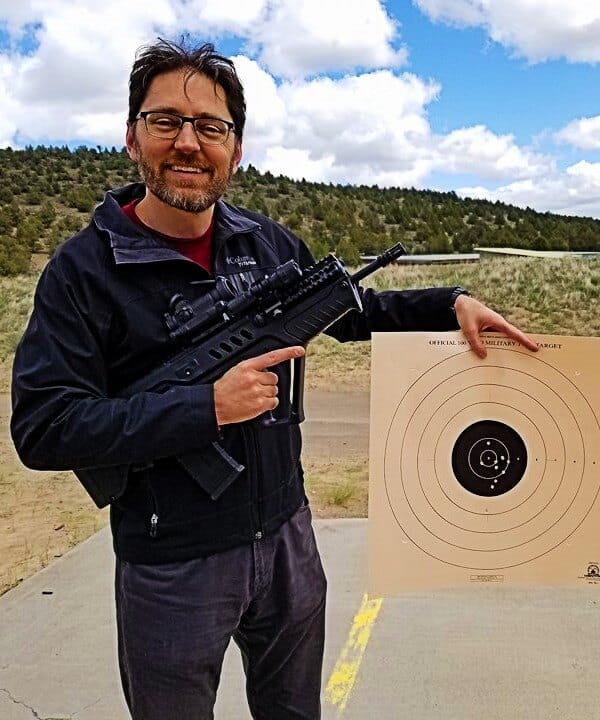
We have options for clients at varying levels of cost, and we’ll start by figuring out which path fits your record. Michael Romano has over 25 years of Oregon trial experience, began his career as a prosecutor, and is an avid target shooter and collector who understands what’s at stake for someone who wants to hunt, shoot, collect, or protect their family again. Call 503-208-5529 or contact our office to schedule a consultation. Once your rights are restored, our guide to Oregon concealed carry laws covers the next step, and our Oregon gun rights section covers the rest.
Last updated: September 27, 2026 | Reviewed by Michael G. Romano, Managing Attorney. This page provides general information about Oregon law, not legal advice for your specific situation.