
Representing yourself in Oregon criminal court– including on DUI and traffic crimes– is foolish and dangerous. There is a reason that the founders of the United States of America insisted upon including a right to counsel the Bill of Rights, and there is a reason that the Supreme Court of the United States has consistently held that Americans accused of crimes not only have a right to an attorney, but they have a right to have an attorney appointed to them at no cost of they cannot afford one. Nevertheless, many people attempt to represent themselves in Oregon criminal courts. They do it to save money, they do it for a sense of pride, or they do it because they didn’t think it through.
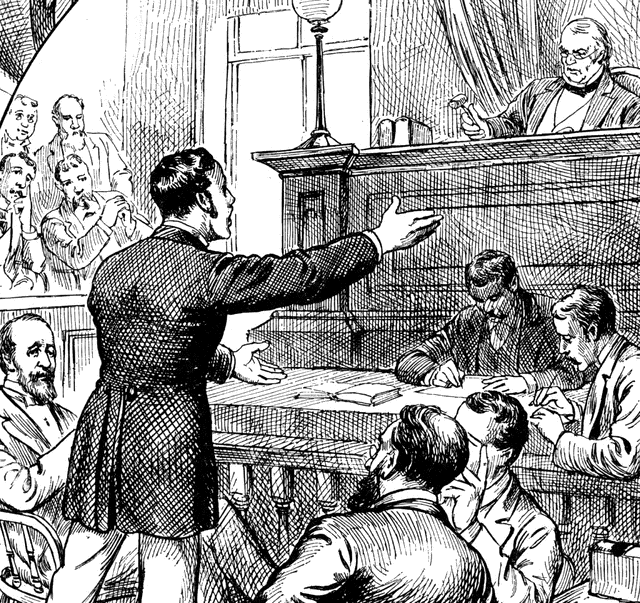
Should I Represent Myself in Oregon Criminal Court?
There are many risks in acting as your own attorney. There is an inherent danger in proceeding to represent yourself. You will be up against all the powers of the government. Law enforcement personnel such as the police, sheriff, or Oregon State Police are not required to be honest with you, may in fact be dishonest with your or– at the very least– may not share vital and helpful information with you. In addition, a skilled, trained and experienced attorney will be representing the government. This could be a city attorney, county attorney, Deputy District Attorney, prosecutor, or Assistant Attorney General.
The Dangers of Representing Yourself in Oregon Criminal Court
You may not understand the nature of the crimes you’re charged with, including:
- The legal definitions which apply to the charges,
- The penalties and seriousness of being convicted, and
- The collateral consequences of being convicted.
You may not know what motions could be filed, such as:
- A demurrer,
- A motion to suppress,
- A motion for a speedy trial, and
- A motion to limit evidence.
You may not know how to prepare for trial, including:
- How to obtain discovery,
- What witnesses to call,
- How to subpoena witnesses,
- Whether or how to prepare a trial memorandum,
- How to prepare jury instructions, and
- How to prepare verdict forms.
You may not know or have difficulty at trial with:
- Voir Dire or jury selection procedures,
- How to make an effective opening statement,
- How to direct examine witnesses,
- How to effectively cross-examine witnesses,
- How to object to evidence produced by the Government,
- How to present your case-in-chief,
- How to present exhibits and enter them into evidence,
- How to prepare and deliver an effective closing argument, and
- How to object and take exceptions to jury instructions.
I may not know how to handle other issues such as:
- How to present evidence and information for sentencing, and
- How to object to judgment that is entered, and
- How to prepare or file an appeal.
Remember: You are entitled to a public defender if you are indigent (e.g. you can’t afford an attorney on your own). If you can afford an attorney, give us a call to help protect your rights.